


 Deutsch
 English
 Español
 Français
 Nederlands
 Português


 Share
Share




What Are China's New Critical Minerals Export Controls?
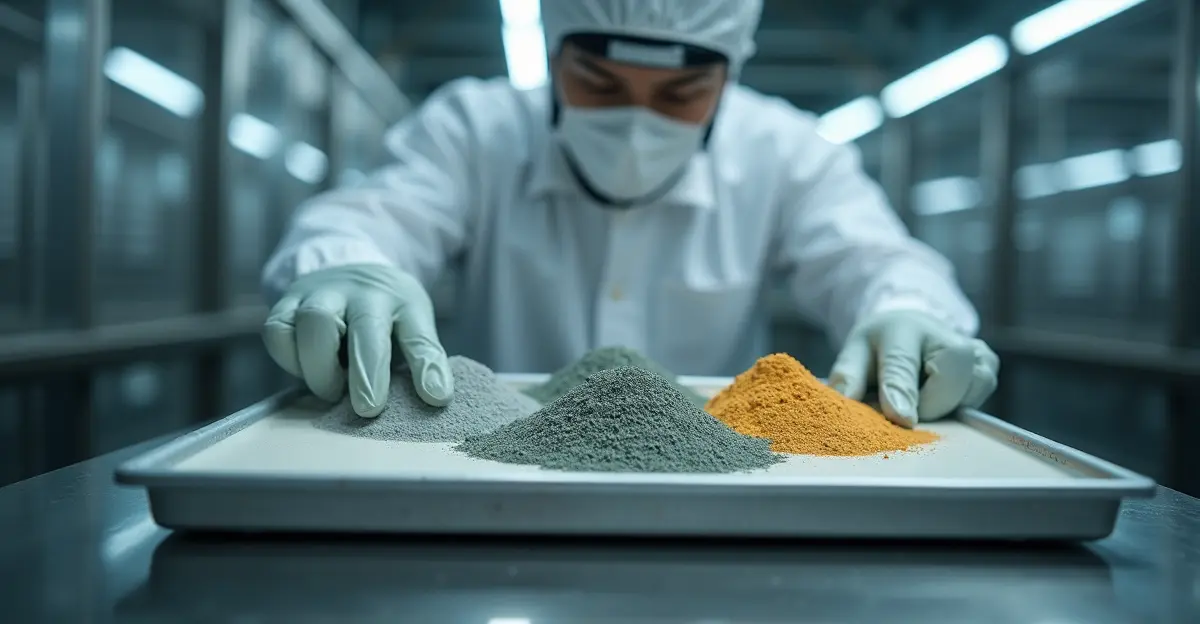
China's Ministry of Commerce announced in October 2025 a significant expansion of export controls on rare earth elements and critical minerals, marking a strategic escalation in the global competition for technological supremacy. The new regulations, which take effect December 1, 2025, extend beyond raw materials to include 'parts, components and assemblies' containing Chinese-sourced minerals, creating unprecedented vulnerabilities in global industrial value chains. This move follows April 2025 controls on seven heavy rare earth elements that already caused supply disruptions and price spikes across multiple sectors. With China controlling 91% of global rare earth separation and refining capacity, these measures represent a calculated use of mineral dominance as geopolitical leverage, directly impacting electric vehicles, wind turbines, defense systems, semiconductors, and AI data centers worldwide.
Geopolitical Context and Strategic Implications
The expanded export controls emerge against a backdrop of intensifying technological competition between major powers. China's dominance in critical minerals processing—controlling 70% of refining for 19 out of 20 strategic minerals—provides unique leverage in what analysts term 'minerals-based economic warfare.' The new regulations specifically target foreign-made products containing Chinese-origin rare earths, requiring dual-use item export licenses even for components manufactured outside China. This represents a significant departure from traditional export controls and creates complex compliance challenges for multinational corporations. The measures appear strategically timed to coincide with global transitions to renewable energy and digital infrastructure, where rare earth dependencies are most acute. According to the International Energy Agency analysis, these controls have transformed theoretical supply concentration risks into immediate operational realities, with European rare earth prices reaching six times Chinese levels following the initial April restrictions.
Immediate Impact on Strategic Industries
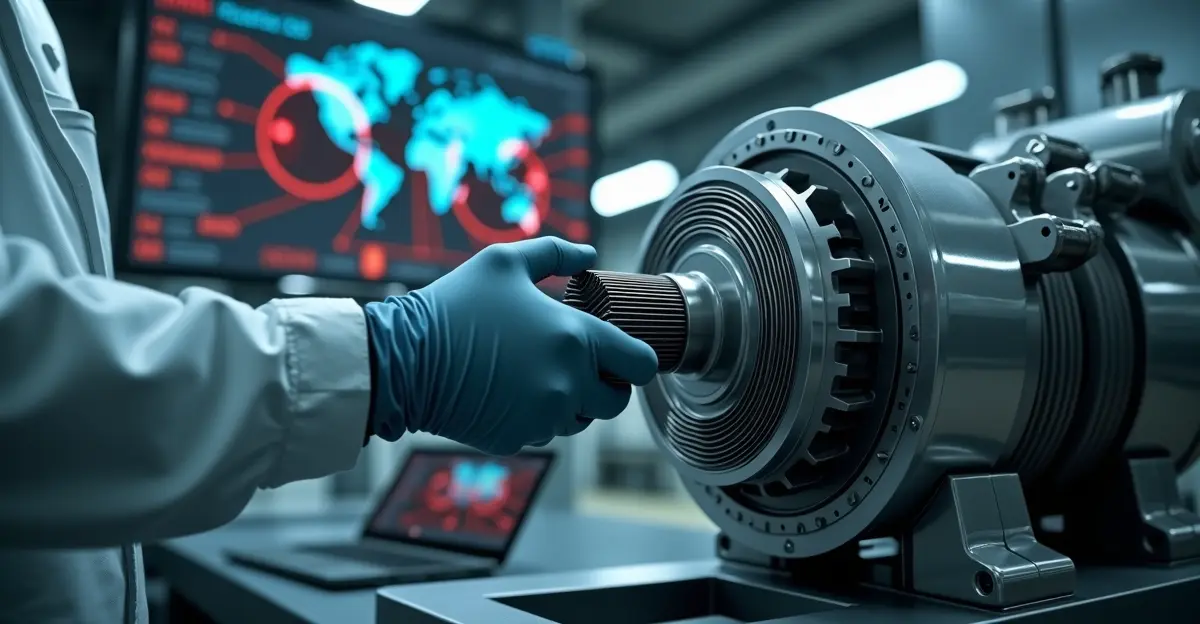
Electric vehicle manufacturers face particularly severe disruptions, as permanent magnets containing neodymium and dysprosium—essential for EV motors—fall under the new controls. Wind turbine producers, already grappling with supply chain challenges, now confront restrictions on generator components containing Chinese-sourced rare earths. The defense sector faces critical vulnerabilities, with advanced weapons systems, radar equipment, and guidance systems all dependent on rare earth elements for their magnetic and electronic properties. Semiconductor manufacturers, already navigating complex global chip supply chains, must now contend with restrictions on materials essential for chip fabrication and packaging. Perhaps most concerning is the impact on AI data centers, where rare earths enable high-performance computing hardware essential for training large language models and running complex algorithms.
Western Diversification Efforts and Counter-Strategies
Western nations have accelerated diversification efforts in response to China's mineral dominance, but progress remains limited. The United States has revived domestic rare earth mining through initiatives like the Mountain Pass facility in California, while Australia has expanded production at its Lynas operations. The European Union's Critical Raw Materials Act aims to reduce dependence on single suppliers, targeting 10% of EU consumption from domestic extraction by 2030. However, these efforts face significant hurdles: establishing processing capacity requires massive capital investment and years of development, while environmental regulations and community opposition complicate new mining projects. Alternative strategies include developing rare earth recycling technologies, substituting less critical materials where possible, and forming mineral alliances with resource-rich nations like Canada, Brazil, and African countries with untapped reserves.
Economic Warfare and Supply Chain Resilience
The expanded controls represent a sophisticated form of economic statecraft that exploits China's position at the center of global mineral processing networks. By restricting not just raw materials but also components containing Chinese-sourced minerals, Beijing can influence entire industrial ecosystems without directly controlling final products. This creates cascading effects throughout supply chains, forcing companies to either redesign products, find alternative suppliers, or navigate complex licensing requirements. The International Energy Agency warns that these measures 'undermine international diversification efforts and create major operational hurdles for emerging projects.' For Western policymakers, the challenge extends beyond securing alternative supplies to building resilient, diversified processing capacity—a task requiring coordinated international action and substantial public-private investment.
Expert Perspectives and Future Outlook
Industry analysts describe the situation as a 'wake-up call' for Western economies. 'China's move from controlling raw materials to controlling components represents a quantum leap in economic leverage,' notes Dr. Elena Rodriguez, a supply chain expert at the Center for Strategic and International Studies. 'This isn't just about minerals—it's about controlling the foundational inputs for the Fourth Industrial Revolution.' The long-term implications extend beyond immediate supply disruptions to fundamental questions about technological sovereignty and economic security. As nations race to secure critical mineral supplies, the risk of resource nationalism and trade fragmentation increases, potentially undermining the global cooperation needed to address climate change and digital transformation. The coming years will test whether Western democracies can build resilient mineral supply chains while maintaining open trading systems—a delicate balance with profound implications for global stability and prosperity.
Frequently Asked Questions
What exactly do China's new export controls cover?
The October 2025 regulations extend controls to include 'parts, components and assemblies' containing Chinese-sourced rare earth elements, requiring export licenses even for foreign-made products. This expands beyond the April 2025 restrictions on seven heavy rare earth raw materials.
Which industries are most affected by these controls?
Electric vehicles, wind turbines, defense systems, semiconductors, and AI data centers face immediate disruption due to their heavy reliance on rare earth elements for permanent magnets, electronic components, and specialized materials.
How have prices responded to these restrictions?
European rare earth prices reached six times Chinese levels following the initial April 2025 controls, with further price spikes expected as the expanded regulations take effect in December 2025.
What are Western countries doing to reduce dependence?
Initiatives include reviving domestic mining (US Mountain Pass), expanding Australian production, implementing the EU Critical Raw Materials Act, developing recycling technologies, and forming mineral alliances with resource-rich nations.
When do the new regulations take effect?
The expanded controls announced in October 2025 take effect December 1, 2025, giving companies limited time to adjust their supply chains and compliance procedures.
Sources and Further Reading
This analysis draws on official documents including Ministry of Commerce Notice 2025 No. 61, Reuters reporting on October 2025 controls, and International Energy Agency analysis of supply concentration risks. Additional context comes from European Parliament assessments of rare earth dependencies and industry reports on critical mineral supply chains.



Follow Discussion